Construction
Labour-Only vs Complete Construction Contract: How to Choose for Your House
Labour-only or material-plus-labour? Compare the two construction contract types, what a written agreement should include, stage payments, retention and how to compare contractor quotes.
By Naimat Khan7 min read
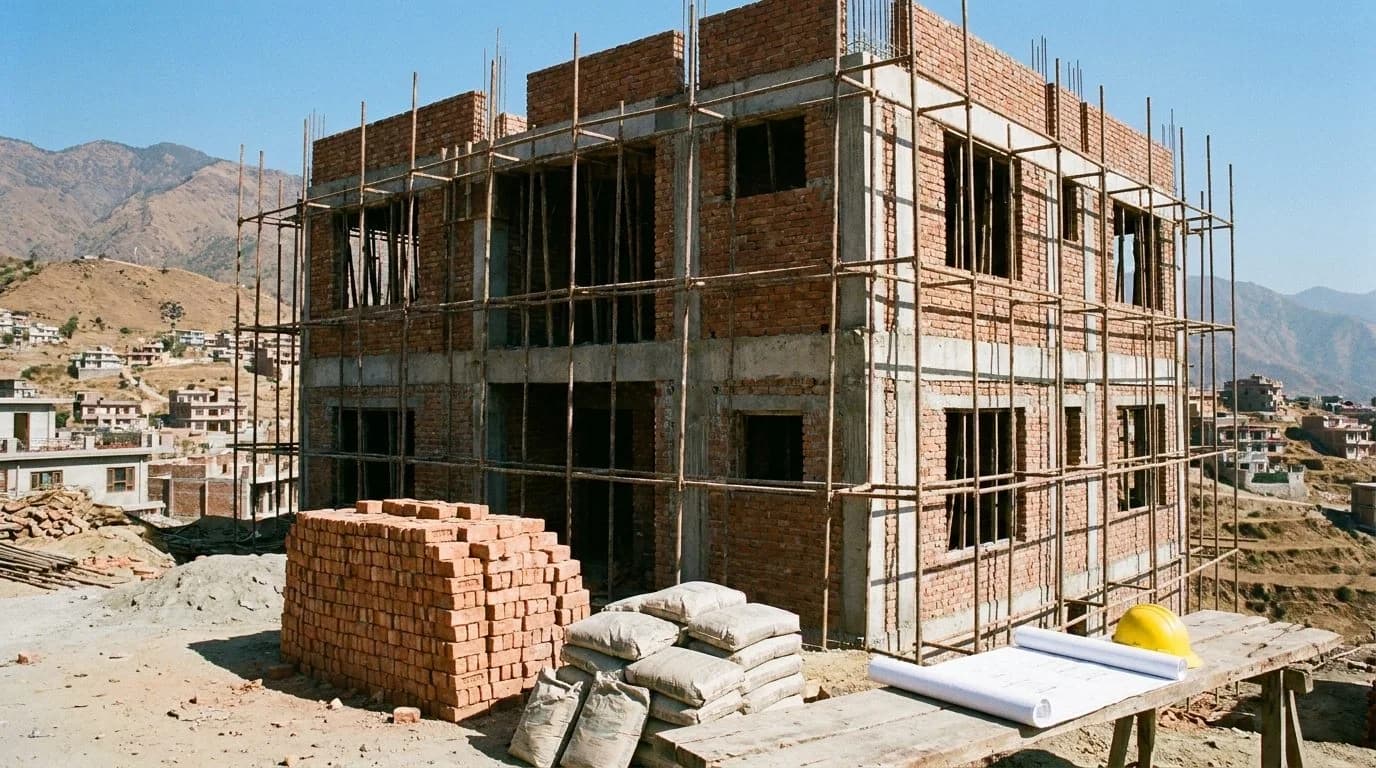
If you are building a house, the most important contract choice is who carries the cost and quality risk. In a labour-only contract you buy the materials and the contractor supplies workers; in a complete (material-plus-labour) contract the contractor supplies both for an agreed rate. Neither is automatically better. The right choice depends on how much time you can give the site, how well you can check materials, and how clearly the drawings and specifications are written down.
This guide explains how each contract type works, what a written construction agreement should contain, how to structure payments and retention, and how to compare contractor quotes fairly.
Labour-only vs complete construction contract: the basics
Labour-only (thekedari on labour)
The owner buys cement, steel, bricks or blocks, sand, crush, pipes and fittings. The contractor provides masons, labourers, steel fixers and supervision of the work, usually priced per square foot of covered area or per item of work.
- Advantages: you control material brands and quality, you see every invoice, and the contractor's rate is lower because it excludes materials.
- Risks: you (or your representative) must order, receive, count and store materials on time. Delays in deliveries stop the work, and wastage or theft on site becomes your cost.
Complete contract (material plus labour)
The contractor supplies materials and labour for an agreed price, either per square foot or as a lump sum for a defined scope such as grey structure.
- Advantages: one party is responsible for supply and workmanship, you spend less time on site, and the budget is clearer from the start.
- Risks: material quality can be reduced to protect the contractor's margin unless brands, grades and quantities are written into the agreement and checked. Price changes in steel or cement can lead to disputes if the agreement is silent on escalation.
Side-by-side comparison
| Point | Labour-only | Complete contract |
|---|---|---|
| Who buys materials | Owner | Contractor |
| Owner's time on site | High (ordering, receiving, checking) | Lower (inspections at key stages) |
| Control over brands and grades | Direct | Only through the written specification |
| Price risk on materials | Owner | Contractor, unless an escalation clause shifts it |
| Main dispute risk | Delays blamed on late material supply | Quality and quantity of materials used |
| Suits | Owners living nearby with time to supervise | Busy or overseas owners who use an independent supervisor |
Many owners use a mixed approach: a complete contract for grey structure, then labour-only or separate item rates for finishing, where personal choice of tiles, fittings, doors and paint matters most. Our guide to grey structure vs finishing stages explains what each stage normally includes.
What a written construction agreement should include
Verbal agreements are common in house construction, but most disputes come from things that were never written down. Under Pakistan's Contract Act, 1872, an agreement made by free consent for a lawful purpose is enforceable, but a court or mediator can only enforce what can be shown. A short written agreement, signed by both parties with witnesses, should cover at least the following.
- 1Parties and site: names, CNIC copies, contact details and the plot address.
- 2Scope of work: reference the approved drawings by number and date, and list exactly what is included and excluded (for example excavation, plinth, slabs, boundary wall, water tank, septic tank, plaster).
- 3Specification: concrete mix or strength, steel grade and brand, brick or block type, cement brand, plaster thickness, curing method. For complete contracts this is the owner's main protection.
- 4Rate and price basis: per square foot (and how covered area is measured), lump sum, or item rates. State whether the rate is fixed or subject to escalation, and how escalation is calculated.
- 5Payment schedule: linked to completed stages, not to dates alone (see below).
- 6Timeline: start date, stage targets, completion date, and what happens if either side causes delay.
- 7Variations: any change to drawings or scope must be agreed in writing with its price before the work is done.
- 8Quality checks and defects: who inspects, how defective work is corrected, and a defects period after completion.
- 9Site safety and labour: who is responsible for scaffolding, safety equipment and labour payments.
- 10Dispute resolution: a named mediator or arbitration process before going to court.
Payment schedule and retention
Pay against completed stages
A stage-based schedule keeps payments in line with work actually done. A typical structure for a grey-structure contract might look like this (the stages are an illustration to adapt, not a standard):
- Mobilisation advance on signing (keep it modest)
- Foundation and plinth complete
- Ground floor walls and roof slab complete
- First floor walls and roof slab complete
- Plaster, parapets and remaining grey-structure items complete
- Retention released after the defects period
Before each payment, check the stage against the drawings, take dated photographs, and record the payment in writing with a receipt. Bank transfers create a clearer record than cash.
What retention means
Retention is a part of each payment that the owner holds back until the work is finished and the agreed defects period has passed. For example, if the agreement sets retention at 5% and a stage bill is Rs 1,000,000, the owner pays Rs 950,000 and holds Rs 50,000. The held amount is released when defects such as cracks, leaks or poor levels have been corrected. The percentage and defects period should be agreed in writing at the start.
How to compare contractor quotes fairly
Two per-square-foot rates are only comparable if they cover the same scope and specification. Before choosing:
- Give every contractor the same drawings and a written specification, and ask for a breakdown, not just one rate.
- Check how each contractor measures covered area (for example whether porches, stair rooms and boundary walls are included).
- Ask which items are excluded, such as water and electricity during construction, curing water, excavation disposal or the septic tank.
- Visit at least one house each contractor has completed and one that is under construction. Look at brickwork alignment, column and beam finish, and curing practice.
- Ask previous clients whether the work finished on time and how variations were handled.
An unusually low quote often means lower specification, missing items, or later variation claims. Our checklist of questions to ask before starting construction covers approvals and planning steps that should be settled before the contract is signed.
Supervision: the part owners underestimate
Whichever contract type you choose, someone independent of the contractor should check the work at key points: excavation depth, steel placement before each pour, concrete mixing and curing, and slab levels. For complete contracts this is how you confirm that the specified materials are actually used. Owners who live abroad or cannot visit regularly often appoint an engineer or a trusted representative and ask for photo and video updates at each stage.
How NASASI Estate helps
NASASI Estate offers construction services and advisory support for clients building in Quetta. We can help you define the scope and specification, compare contract options, plan a stage-based payment schedule, and arrange site supervision and progress reporting, including for overseas owners. To discuss your project, please contact us.
Frequently asked questions
Is a labour-only contract always cheaper?
The contractor's rate is lower because materials are excluded, but the total cost depends on how well materials are bought, stored and used. Wastage, delays and price changes are carried by the owner.
Can I switch from a complete contract to labour-only halfway?
It is possible if both parties agree, but the agreement should record the work completed, payments made, materials on site and how the change is priced. Settle this in writing before the switch.
What is an escalation clause?
It is a clause that adjusts the contract price if specified material prices, such as steel or cement, rise or fall beyond an agreed level. Without one, a fixed-price contractor carries that risk, and disputes are more likely when prices move sharply.
Should the contractor or the owner get building approval?
Approval of drawings from the relevant authority or society is normally the owner's responsibility before work starts, although an architect or contractor may handle the paperwork. The agreement should state who does it.