Property Guide
Bayana Agreement in Pakistan: What to Check Before Paying Token Money
What a bayana agreement does and does not do in Pakistan, the terms to write down, how token money is refunded or forfeited, and the checks to finish before you pay.
By Naimat Khan9 min read
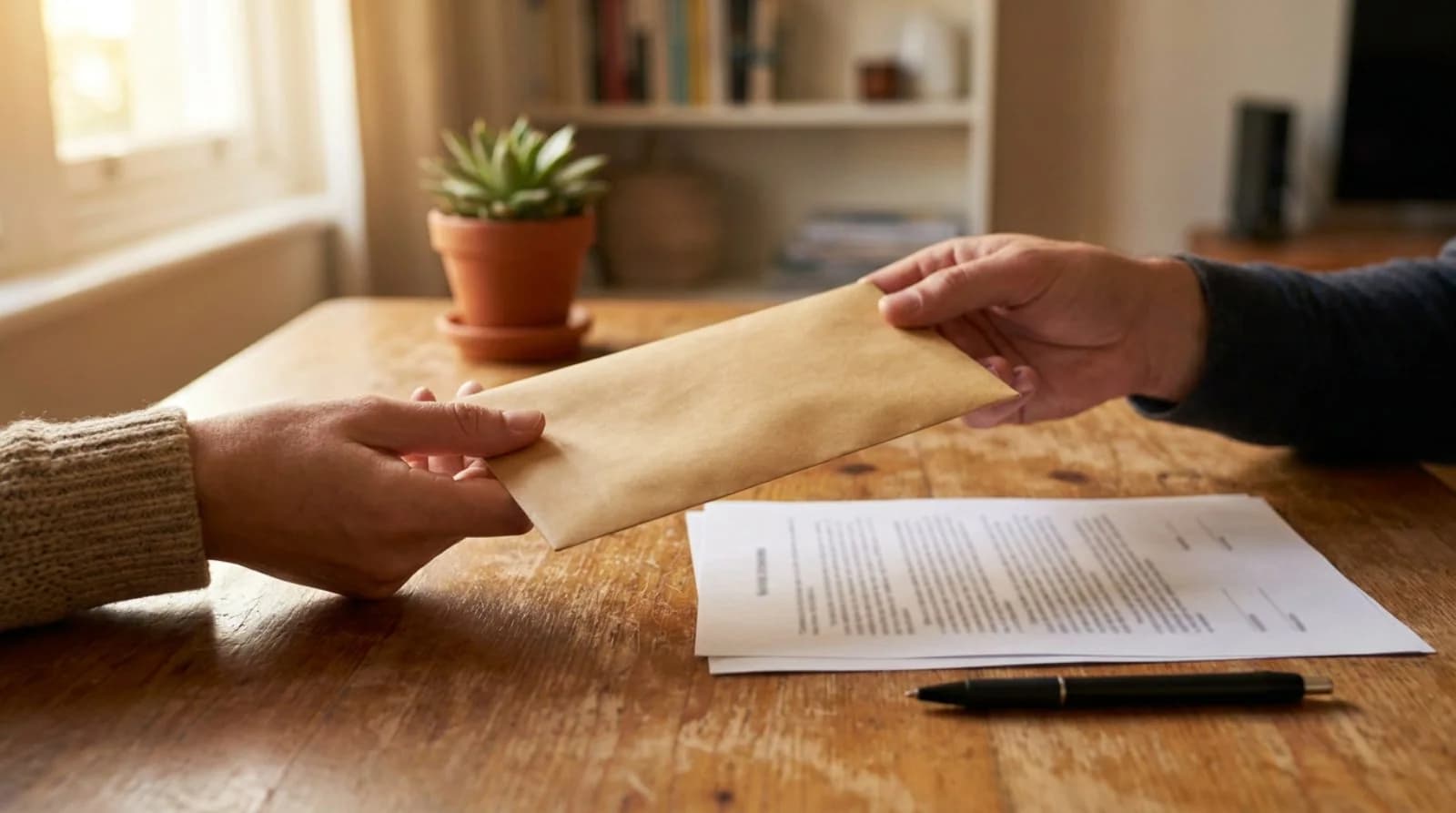
A bayana is the token or earnest money a buyer pays to show commitment and to hold a property while the rest of the deal is completed. In Pakistan it is usually paid against a written bayana agreement (also called an agreement to sell or iqrarnama). That agreement matters more than the amount: it decides what happens to your money if the deal is delayed, cancelled or disputed, and it does not by itself make you the owner.
This guide explains what a bayana agreement should contain, what it does and does not do legally, and the checks worth completing before you hand over any token money.
What a bayana agreement is, and what it is not
Under the Transfer of Property Act 1882, a contract for the sale of immovable property is an agreement that a sale will take place on terms settled between the parties. Section 54 states that such a contract does not, of itself, create any interest in or charge on the property. In plain terms, signing a bayana agreement gives the buyer a contractual right against the seller, not ownership.
Ownership passes only when the sale itself is completed in the form the law or the relevant authority requires. For land and houses held under the revenue system this normally means a registered sale deed and mutation in the land record; for plots in housing societies or authorities it means the society's own transfer procedure. Until then, the property remains the seller's.
Why the agreement still matters
- It is the main evidence of the price, the payment schedule and the deadlines both sides accepted.
- If the seller refuses to complete, the buyer may ask a court for specific performance under the Specific Relief Act 1877. That remedy is discretionary, so a clear, well-witnessed agreement and proof of your own readiness to pay carry real weight.
- It sets out whether, and how, the token money is refunded or forfeited if the deal fails.
Terms every bayana agreement should state clearly
Many disputes start with a one-page agreement that leaves out the basics. Before you sign, make sure the document answers each of the following points in writing.
| Term | What to write down |
|---|---|
| Parties | Full names, father's or husband's names, CNIC numbers and addresses of every seller and buyer. If an attorney signs for the seller, attach a copy of the power of attorney. |
| Property | Exact description matching the title documents: plot or khasra number, area, block or sector, society or mauza, and boundaries where relevant. |
| Price | Total agreed price in figures and words. |
| Bayana amount | The token amount, how it was paid (bank transfer, pay order or cheque number) and a statement that it is part of the total price. |
| Payment schedule | Each further instalment, its amount and its due date, and the final date for the balance. |
| Completion | Who will arrange the transfer, registry or society transfer, by when, and when possession will be handed over. |
| Costs and taxes | Who pays transfer fees, stamp duty, withholding taxes, society dues and any pending utility bills. |
| Default terms | What happens if the buyer misses a payment or the seller refuses to transfer, including any refund or forfeiture of the token money. |
| Witnesses | Names, CNIC numbers and signatures of the witnesses. |
Deadlines are not a formality
Write realistic dates and keep to them. In a June 2026 judgment reported by the Associated Press of Pakistan, the Supreme Court held that a buyer who had paid earnest money but did not pay the balance within the agreed time, or deposit it when the trial court directed, was not entitled to transfer of the property. The court described specific performance as available to a party that continuously shows readiness, willingness and the financial capacity to perform. If you are the buyer, plan your funding before you sign, not after.
Refund and forfeiture of token money
Many agreements say the buyer forfeits the bayana if the buyer backs out, and the seller returns double the bayana if the seller backs out. These clauses are common, but how a court treats them depends on the facts of the case and the wording of the agreement. Legal commentary in Pakistan has pointed out that courts have not always enforced forfeiture or double-return clauses in full, and that outcomes have differed between cases.
Because of that uncertainty, the practical approach is to:
- 1State plainly whether the token is part payment of the price.
- 2Say what happens to it on each type of default, and by when any refund must be made.
- 3Avoid open-ended wording such as "the deal will be cancelled" without saying what happens to the money.
- 4Take advice from a property lawyer on the default clause before signing if the amount is significant.
Checks to complete before you pay any token money
The safest bayana is the one paid after the basic checks are done. A token paid in a rush, to "lock" a property, is where many buyers lose money.
- 1Confirm the seller is the owner. Match the seller's CNIC with the title documents, or with the society's records for a society plot. If the property is jointly owned or inherited, every co-owner should be a party or properly represented.
- 2Verify the documents with the issuing authority. For society or authority plots, ask the society office to confirm ownership and dues. For revenue land, check the record with the relevant revenue office. Our guide on how to verify property documents before buying land in Quetta sets out the steps.
- 3Check for disputes and charges. Ask whether the property is mortgaged, under litigation or already under agreement with someone else.
- 4Visit the property. Confirm the plot or house on the ground matches the documents and that there is no occupant claiming possession.
- 5Clarify the dealer's role. If a dealer is involved, agree the commission in writing and confirm who is holding any money. See our questions to ask a property dealer before you pay anything.
How to pay the bayana safely
- Pay through a bank transfer, pay order or crossed cheque in the name of the owner, not in cash and not to a third party unless the owner authorises it in writing.
- Quote the transaction reference in the agreement and keep the bank record.
- Get a signed receipt from the owner even when the payment is through a bank.
- Keep the token reasonable. There is no legal fixed percentage; the amount is a matter of agreement, but a smaller token reduces your exposure while checks continue.
Witnesses, stamp paper and registration
Under Article 17 of the Qanun-e-Shahadat Order 1984, where a document concerns a financial or future obligation it should be attested by two witnesses (two men, or one man and two women) so that one may remind the other. In practice, bayana agreements are signed before at least two adult witnesses who also record their CNIC numbers.
Agreements are normally written on stamp paper of the value applicable under the stamp law in force in the province. Ask your lawyer or the stamp vendor for the current requirement rather than relying on an old template.
The bayana agreement is not the sale deed. Section 17 of the Registration Act 1908 requires instruments that transfer ownership of immovable property to be registered, and the sale is completed through that registration or through the society or authority's own transfer process. Keep the bayana agreement safe until the transfer is complete; it remains your evidence of the deal until then.
Common mistakes
- Signing an agreement with only one of several heirs or co-owners.
- Paying cash to a dealer with no receipt from the owner.
- Leaving the final payment date blank or vague.
- Not saying who pays taxes and transfer costs. Your tax status affects these costs; see filer vs non-filer property tax.
- Treating the bayana agreement as proof of ownership and delaying the actual transfer.
How NASASI Estate helps
NASASI Estate provides property advisory and documentation support in Quetta. We can help you review the seller's documents, plan the payment schedule, prepare for the transfer process and coordinate with the society or office involved. For overseas buyers, we can support the process remotely. Speak to our advisory team before you pay a token, or contact us with the details of the property you are considering. For legal drafting and disputes, we recommend you also consult a qualified property lawyer.
Frequently asked questions
Does paying bayana make me the owner of the property?
No. A bayana agreement is a contract for a future sale. Under Section 54 of the Transfer of Property Act 1882 it does not create an interest in the property. Ownership passes only on completion of the registered sale or the society transfer.
How much token money should I pay?
There is no fixed legal amount. It is agreed between buyer and seller. Many buyers prefer to keep it modest until title checks are complete, then pay larger instalments against clear deadlines.
Can the seller keep my bayana if I cannot pay the balance on time?
It depends on the agreement and the facts. Courts have treated forfeiture clauses differently in different cases. Missing agreed deadlines can, however, cost you the right to insist on the transfer, as the June 2026 Supreme Court ruling shows. Get legal advice if a dispute arises.
Do I need witnesses for a bayana agreement?
Yes, it is strongly advisable. Article 17 of the Qanun-e-Shahadat Order 1984 sets out attestation by two witnesses for documents relating to financial or future obligations, and witnesses with recorded CNIC numbers make the agreement easier to prove.
Sources
- The Transfer of Property Act 1882 (Punjab Land Records Authority)
- The Registration Act 1908 (Punjab Land Records Authority)
- The Specific Relief Act 1877 (Pakistan Kanoon)
- Qanun-e-Shahadat Order 1984 (Punjab Police)
- Associated Press of Pakistan: Buyer who failed to pay balance sale consideration not entitled to transfer of property (June 2026)
- Courting The Law: Earnest Money Not So Earnest (2019 commentary)